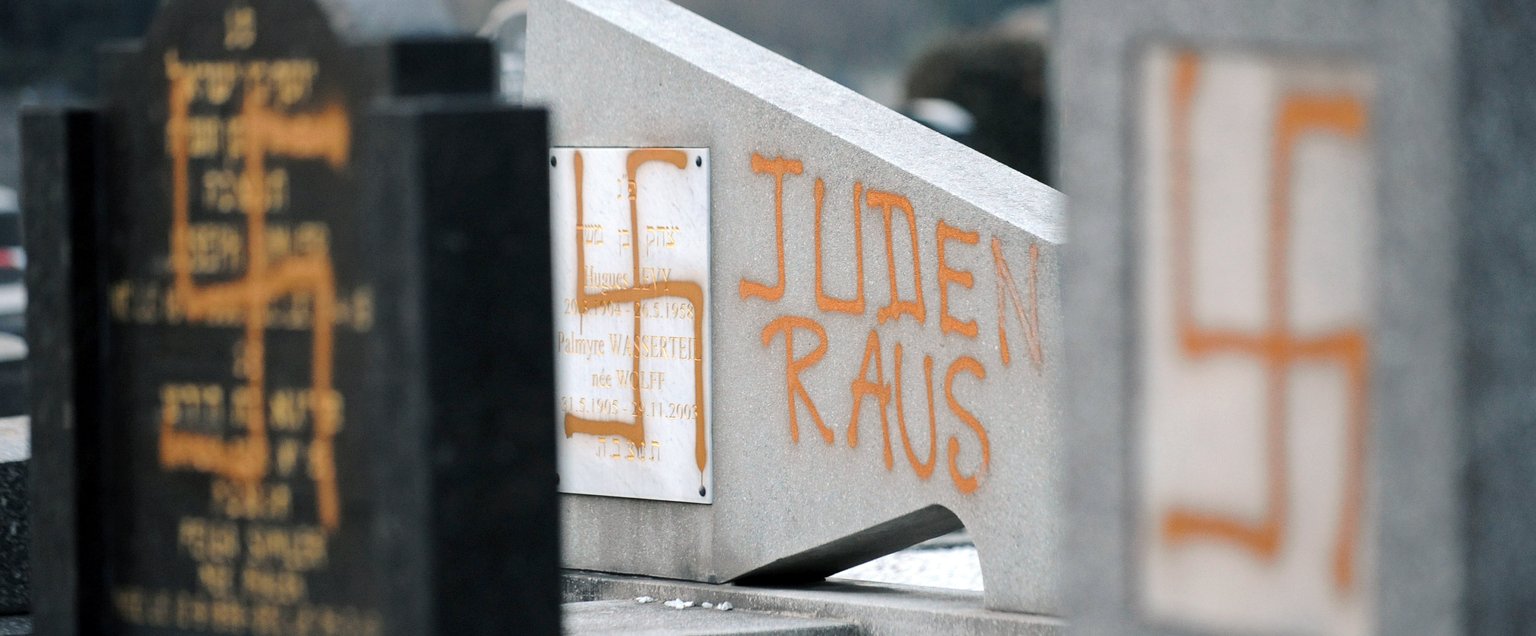
Antisemitism, hatred of Jews, is far from a thing of the past. Economic downturns, pandemics, wars, or migration waves create discontent and uncertainty, often leading to the search for a scapegoat. For centuries, Jews have been that scapegoat. Even today, Jews are still portrayed as suspicious and associated with financial power, political influence, or global conspiracies. Social media acts as a catalyst: old myths take on new forms, a sense of immediacy, and a wider reach.
Online antisemitism as a disruptive force
Online, antisemitism sometimes manifests itself openly and hatefully, but more often in a veiled form, disguised as jokes or satire, rooted in old myths. Social media and algorithms reinforce this dynamic: anyone who views or engages with antisemitic content is subsequently flooded with similar material. This creates digital echo chambers in which antisemitic ideas are not only repeated but also become more normalised and more extreme. Online antisemitism is a disruptive force. Its consequences extend beyond the online world: Jewish communities experience increasing insecurity, and extremist networks find new recruits.
Countering antisemitism
Social media, international conflicts (the war between Israel and Hamas), and the hardening of public debate are making new forms of antisemitism visible while reinforcing old myths. The book Antisemitism: Myths, Masks & Misconceptions addresses all of these aspects. It also explores the intersection between criticism of Israel, anti-Zionism, and antisemitism, and includes a section on football, focusing on anti-Jewish chants inside and outside stadiums. The book concludes with a call to action: you too can do something against antisemitism.